

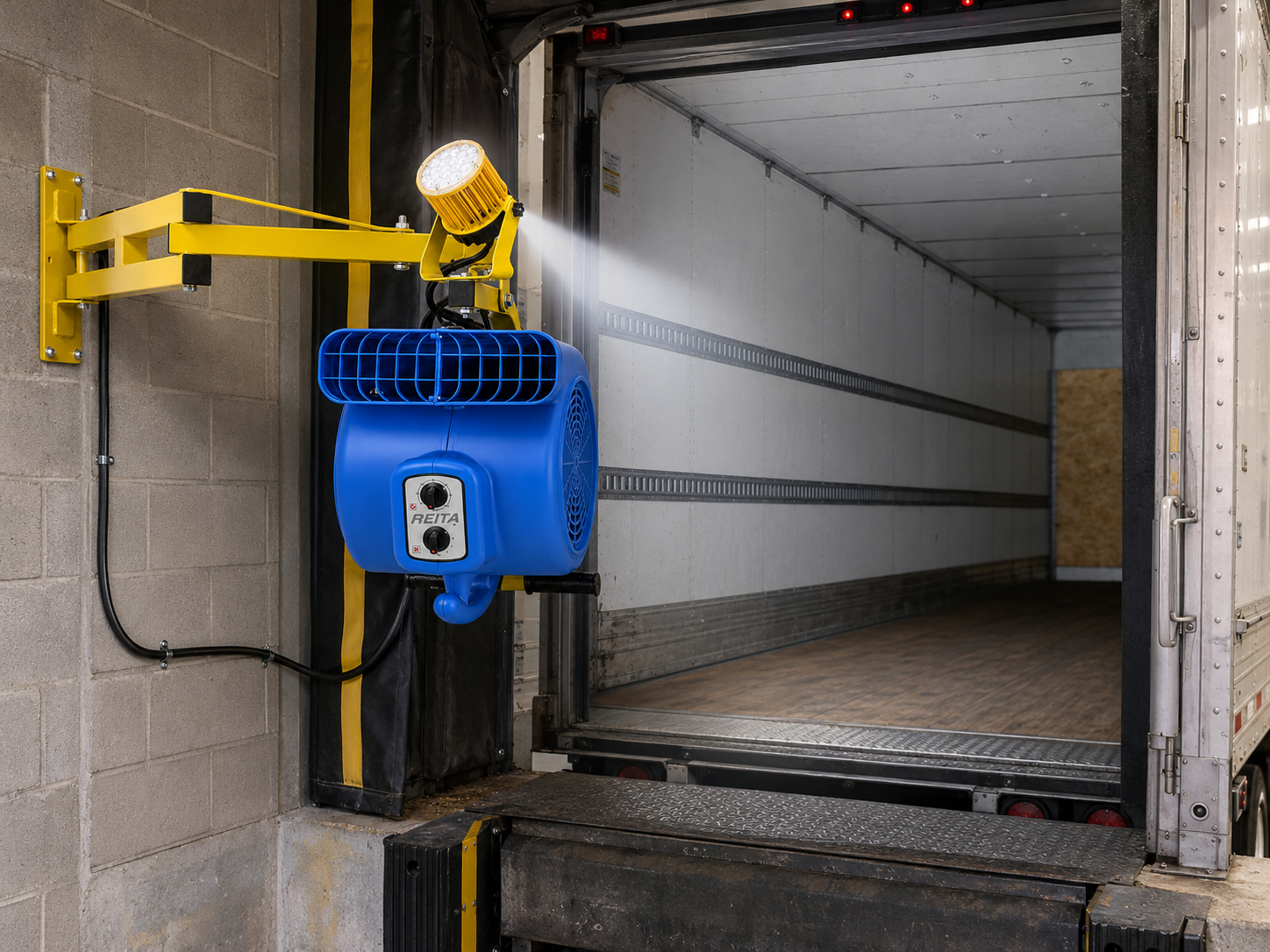
If a dock loading light is installed at the wrong height or with the wrong arm and aiming angle, the result is usually the same: glare at the dock door, weak reach into the trailer, dark floor edges, and poor visibility where loading actually happens. The best setup is not the brightest one. It is the one that places useful light inside the trailer and at the dock threshold without shining into the operator’s eyes or wasting output outside the work zone. In most warehouse applications, good installation depends on three things: proper mounting height, the right dock light arm length and stability, and careful aiming that matches trailer depth and loading activity.
That is why installation matters as much as fixture quality.
A dock light can perform well on paper and still fail in real use if it is mounted too high, too low, too far back, too exposed, or paired with the wrong arm structure. At a busy loading dock, those mistakes show up fast. Workers re-aim the light repeatedly, forklift operators hesitate at the threshold, labels inside the trailer are harder to read, and the light becomes more of a workaround than a real improvement.
This guide explains how to think about mounting height, arm selection, and aiming so a dock loading light improves actual loading conditions instead of creating new visibility problems.
For the complete loading dock lighting framework—including fixture types, trailer visibility, beam angle, safety and system selection—start with the Loading Dock Lighting Complete Guide .

What is the correct mounting height for a dock loading light?
There is no single universal mounting height for every dock, because trailer height, dock geometry, and working distance vary from site to site. But the correct mounting height always follows the same rule: the light should enter the trailer at a useful angle and reach the task zone without creating glare at the dock opening.
If the fixture is mounted too high, the beam often becomes less effective on the trailer floor and may create a brighter upper field while leaving the real working zone underlit. Workers may still struggle with pallet edges, labels, straps, and carton condition several feet inside the trailer.
If it is mounted too low, the beam may be blocked more easily by cargo, door structures, or trailer geometry. A lower mounting point can also increase shadow lines and make the source more exposed to accidental impact.
In most applications, the best mounting height is one that gives the light a downward and inward path into the trailer. The beam should support visibility at the threshold first, then continue far enough into the trailer to make loading and inspection easier. That is why installation should be based on trailer entry angle and work depth, not just on what height looks convenient on the wall.
A practical check is simple: after installation, can the light clearly illuminate the trailer floor and active cargo area without shining outward toward the operator or driver? If not, the height or angle likely needs adjustment.
Why mounting height affects both reach and glare
Many buyers think mounting height is mainly about how far the light can throw. In reality, it affects both reach and glare at the same time.
A higher mounting point may seem like it should improve reach, but if the beam angle is not matched correctly, it can reduce useful task lighting and increase discomfort at the dock opening. A lower mounting point may improve local intensity, but it can also shorten effective reach and create harder shadows deeper inside the trailer.
This is why mounting height should never be considered alone. It must be evaluated together with beam pattern, arm length, and aiming angle. In real loading dock work, the right installation geometry matters more than raw fixture brightness.
Facilities that are reviewing a wider loading dock lighting strategy should also remember that local dock light installation and general dock area lighting should work together. A well-installed local fixture improves the task zone. It does not replace broader dock visibility planning.
Dock light arm options
The dock light arm is not just a bracket. It is part of the lighting performance.
A short or unstable arm may keep the fixture too close to the wall or door frame, limiting the beam path into the trailer. An arm that is too weak may drift out of position over time, especially in busy docks where lights are adjusted frequently. If the arm does not hold alignment, even a good light head will not stay useful.
When choosing a dock light arm, buyers should compare four practical points.
The first is reach. The arm needs enough extension to place the light where it can project inward effectively. Too little reach usually means more wasted light near the opening and less usable illumination inside the trailer.
The second is stability. A good arm should hold position after repeated adjustment. If workers have to fight the fixture or keep correcting its angle, the installation will quickly become frustrating.
The third is adjustment range. Trailer heights change. Some operations work mainly at the threshold, while others go deeper into the trailer. The arm should allow useful aiming changes without becoming mechanically awkward.
The fourth is durability. Loading docks are high-use environments. The arm structure should tolerate vibration, handling, and occasional rough conditions without loosening too easily.
In many real projects, the arm matters just as much as the light head because it determines whether the light stays correctly positioned over time.
How do you choose the right dock light arm length and aiming angle?
Start with the actual working distance.
If the main problem is deeper trailer visibility, the light needs a beam path that reaches farther inward. That usually means selecting an arm length and aiming angle that push the fixture into a more effective forward position rather than leaving it too close to the wall.
If the main issue is visibility near the dock threshold, pallet checks, or immediate forklift entry, the installation may not need as much forward reach, but it still needs careful aiming to avoid spill and glare.
The correct aiming angle is usually downward and inward, following the loading path rather than pointing outward into open space. The goal is to light the trailer floor, cargo area, and working zone, not the operator’s face and not the upper trailer wall.
A useful test is to look at where the beam lands first. If the brightest part of the beam sits too close to the door opening, the reach may be too weak. If too much light escapes outward or feels harsh near the operator’s line of sight, the aiming angle may be too aggressive or too exposed.
This is why dock lights work best when the arm length and beam direction are chosen together, not separately.

Aiming & glare control
Good aiming is what turns a dock light into a real loading tool.
A poorly aimed fixture often creates one of three problems. First, it shines too high and wastes light on upper trailer surfaces. Second, it shines too outward and causes glare at the dock opening. Third, it shines too narrowly into one spot and leaves the surrounding task zone uneven.
The best aiming method is to follow the task. Where do workers need to see? Where do forklifts slow down? Where do labels become harder to read? The beam should support those exact zones.
Glare control is especially important. At the dock opening, the eye is constantly adjusting between different brightness levels. If the source is too visible or the beam spills outward, the area may feel bright but still perform badly. Good aiming keeps the light useful while keeping the source less intrusive.
This is also where a dock light led solution can show its value. With the right optical control and correct aiming, LED dock lights can produce better working visibility without needing excessive power or over-lighting the dock face.
What installation mistakes cause glare, weak reach, or poor trailer illumination?
The first common mistake is choosing a wall position based only on convenience. A light installed where wiring is easiest may not be in the best position for trailer visibility.
The second mistake is ignoring the beam path. If buyers install the fixture without checking where the light actually lands inside the trailer, they may end up with bright thresholds and dark work zones.
The third mistake is underestimating the arm. A poor arm setup leads to poor aiming, and poor aiming leads to poor lighting performance.
The fourth mistake is aiming for brightness instead of usability. More light does not automatically mean better visibility if it is pointed in the wrong direction.
The fifth mistake is treating the dock light as a standalone fix for every loading problem. In many facilities, the best result comes when focused local lighting works together with broader warehouse dock lights and overall dock layout planning.
FAQ: led loading dock light
What matters more: mounting height or brightness?
Mounting height usually matters more than buyers expect. A bright light installed badly can still perform poorly.
Should the light point straight into the trailer?
No. It should usually be aimed downward and inward so the beam supports the trailer floor and task zone rather than creating glare.
Why does arm selection matter so much?
Because arm length and stability determine whether the beam can reach the right zone and stay aligned during daily use.
Can one dock light solve every loading visibility problem?
Not always. A local dock light helps the task zone, but some sites also need wider loading dock lighting improvements.
If you need to select the correct dock light, arm structure, fan-light configuration or trailer ventilation product for an actual installation, visit REITA Loading Dock Equipment Lighting & Ventilation Solutions or compare Loading Dock Lights & Fans .
Final thoughts
A successful dock loading light installation depends on geometry, not guesswork. The correct mounting height helps the beam enter the trailer effectively. The right dock light arm gives the fixture enough reach and stability. Proper aiming reduces glare and puts useful light where loading actually happens.
That is what makes the difference between a light that looks installed and a light that actually improves loading operations.
For teams planning upgrades, it also helps to compare your local fixture setup with the wider loading dock lighting plan, review related dock door lights needs, and check how your current warehouse dock lights perform across multiple bays. If you want to review your layout before selecting the final setup, you can also explore our industrial lighting products or contact our team for recommendations.
