LED Track & Field Lighting Solutions for Athletics Facilities
REITA provides LED track and field lighting solutions for school athletics facilities, community running tracks, training centers, multi-sport fields and professional athletics stadiums.
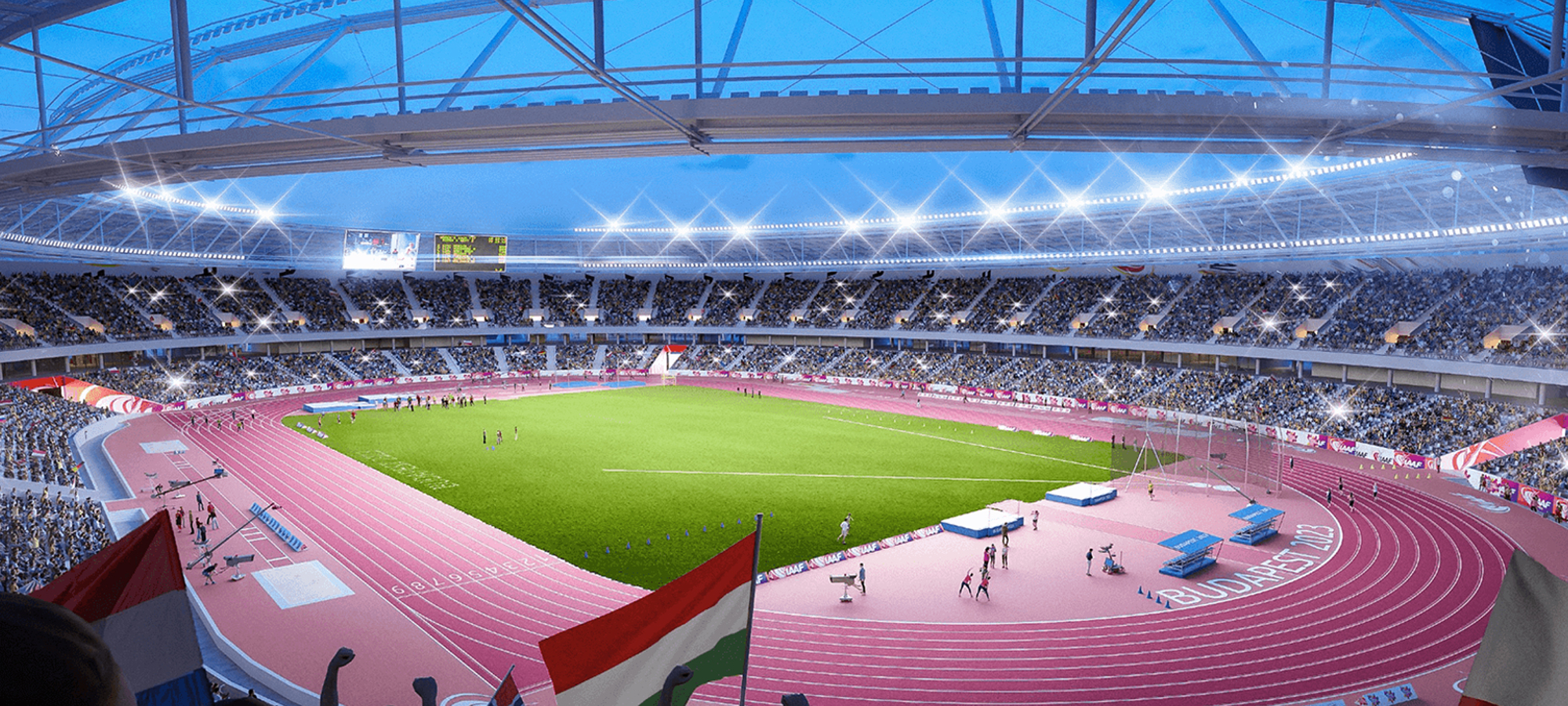
Unlike a simple rectangular sports field, an athletics venue may include a 400 m running track, football or rugby infield, jumping areas, throwing zones, spectator areas and camera positions. Each zone requires different beam angles, aiming directions and illuminance performance.
REITA supports contractors, distributors, stadium operators and engineering companies with LED fixture selection, high-mast configuration, optical planning, IES files, DIALux / AGi32 photometric calculations and project quotations.
The final fixture wattage, quantity and beam distribution should be selected according to the actual track dimensions, pole positions, mounting height, competition level and required lighting performance.
Send Your Athletics Lighting Project to REITA →
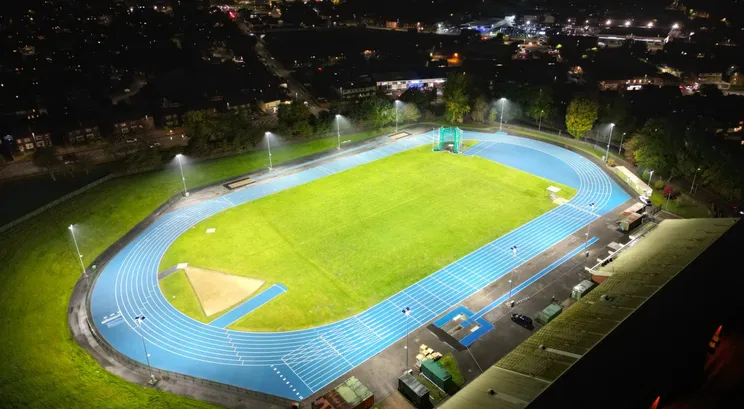
In this guide we share practical tips from real projects using high-mast LED floodlights from 400 W to 1000 W, including a community athletics track in France located right next to residential buildings.
1. Track & Field Lighting Applications and Venue Zones
Before any lighting calculation, make sure you clearly understand the zones you need to light.
Typical Track & Field Lighting Applications
| Facility Type | Main Lighting Requirement | Typical REITA Direction |
|---|---|---|
| School Athletics Track | Safe visibility, practical budget and simple operation | Project-specific LST configuration |
| Community Running Track | Uniform track coverage with controlled spill light | LST Stadium Light |
| Track + Football Infield | Mixed-distance lighting for track and central field | LST with multiple optical distributions |
| Competition Athletics Stadium | Higher illuminance, uniformity and vertical visibility | High-output LST configuration |
| Broadcast Athletics Venue | Vertical illumination, CRI and flicker performance | Professional LST project configuration |
Typical elements:
- 400 m running track – usually 6–8 lanes, 1.22 m each
- Infield area – often a football or rugby pitch used for training and matches
- Jumping events – long jump, triple jump, high jump, pole vault
- Throwing events – shot put, discus, hammer, javelin
- Spectator stands and access paths
- Nearby buildings – schools, houses, roads
Not every project uses all events. For many community facilities the priority is:
- Safe and comfortable lighting for running and fitness
- Basic visibility for football or training in the infield
- Minimal glare and spill light to protect neighbours
Your lighting layout and pole positions should follow these priorities.
2. Recommended lighting levels for running tracks and athletics fields
Different standards give slightly different numbers, but the ranges below are common and practical.
Running tracks – training / community use
- Average horizontal illuminance (Eh,avg): 100–200 lux
- Uniformity (Emin / Eavg): ≥ 0.4
Running tracks – competition (regional / national)
- Eh,avg: 200–300 lux
- Uniformity: ≥ 0.5–0.6
- Good vertical illuminance so athletes and lane markings are clearly visible
Infield football / rugby pitch
- Follow the same classes as in your
Football & Soccer Field Lighting Standards (2025 Practical Guide)
For community projects where budget is limited, a realistic strategy is:
- Design the track for around 150–200 lux
- Provide similar or slightly higher levels on the infield if it is used for football matches
- Keep glare low for athletes running on the curves and straights
3. Pole layout and mounting heights
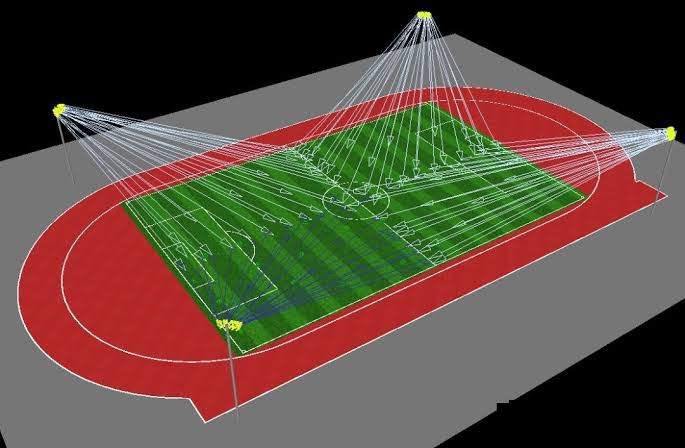
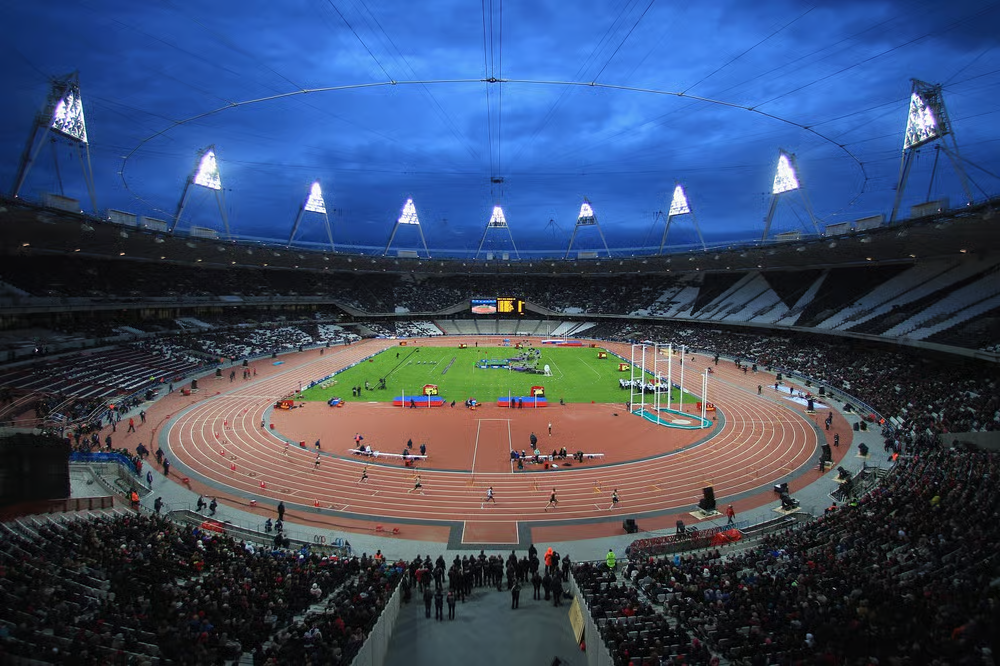
Most running tracks use high-mast lighting around the perimeter.
Common configurations:
3.1 6–8 high masts around the track
- Masts placed outside the track, often aligned with the straights and curves
- Mounting height: typically 18–25 m for community facilities
- Fixtures aimed to cover both the track and the infield
Advantages:
- Fewer poles in the way of spectators and circulation
- Easier to share lighting with the central football pitch
Points to watch:
- Check wind load and structural capacity carefully for high masts
- Avoid placing masts directly behind the finish line where cameras are located
3.2 Combined with football stadium lighting
If the athletics track surrounds a main football pitch:
- You may already have roof-mounted or corner masts for the pitch
- Additional masts can be added in the corners or outside the curves to bring light onto the running lanes
- Use separate circuits so you can switch “track only” or “track + pitch” scenes
For ideas on pole height and spacing, refer to your
Sports Lighting Pole Height & Layout Guide (2026 Complete Standard)
4. Recommended LED Lights for Track & Field Stadiums
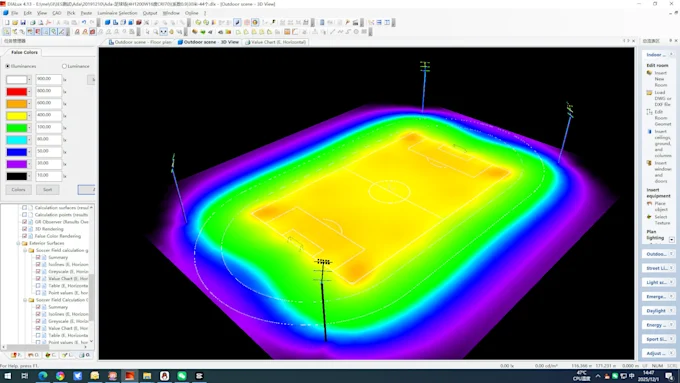
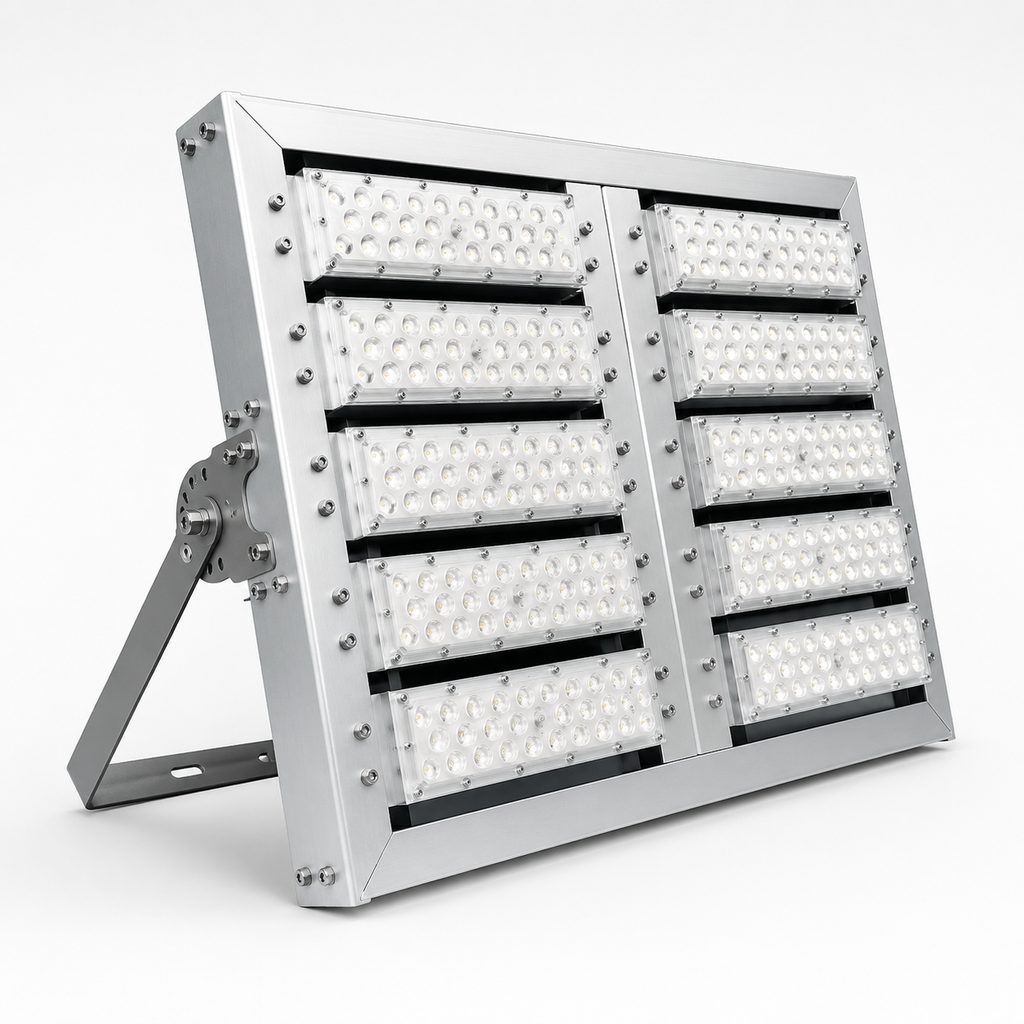
Track and field venues usually require long-distance projection from high masts together with wider optical distributions for curves, near zones and infield areas. For this reason, fixture selection should be based on photometric performance rather than wattage alone.
REITA LST Stadium Light Series
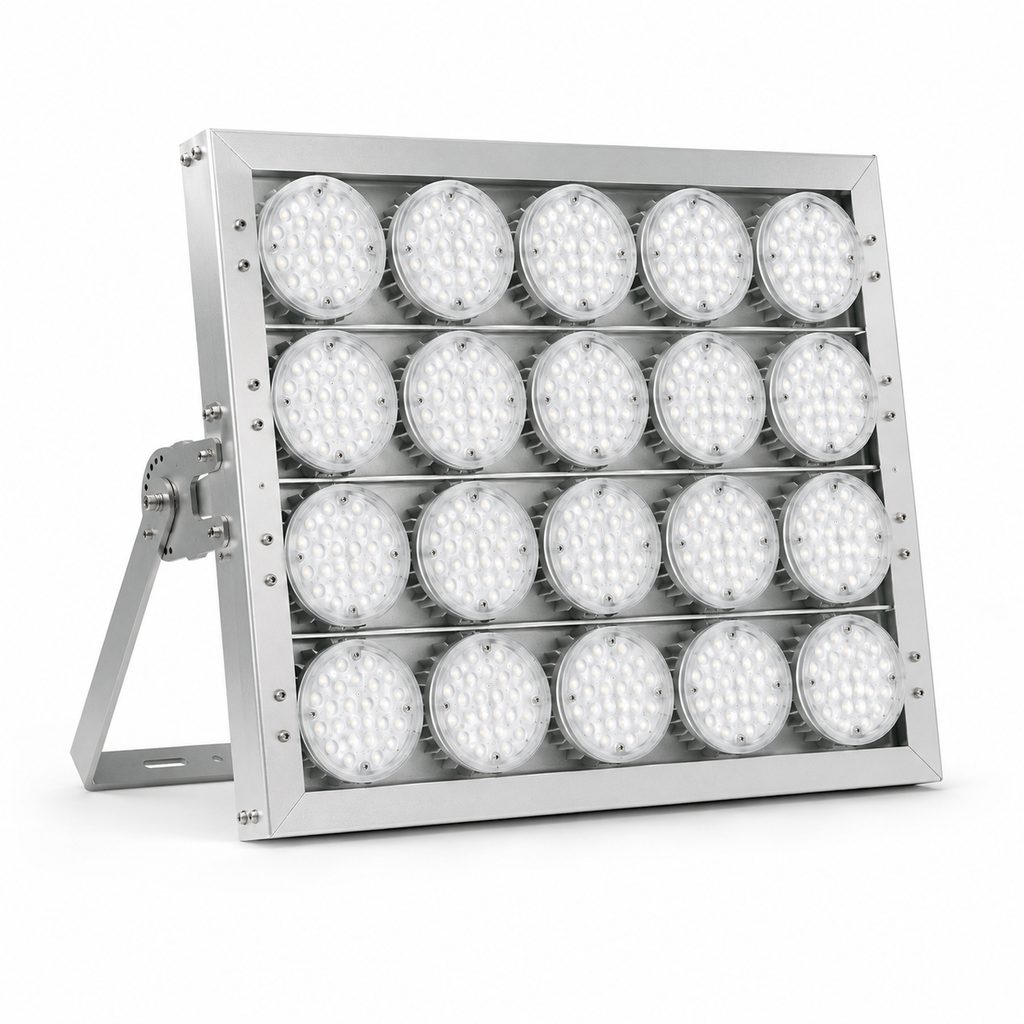
The REITA LST Stadium Light Series is the primary fixture platform we recommend for athletics tracks, high-mast sports fields and professional stadium projects.
- Power range from 100W to 2500W
- Up to 180 lm/W depending on configuration
- 10°, 25°, 45°, 70°, 90° and 95° optical options
- IP66 outdoor protection
- IK10 impact resistance
- Mean Well or Inventronics driver options
- 0–10V, DALI, DMX and other control options
- IES photometric files for DIALux and AGi32 calculations
5. Track & Field Photometric Lighting Design
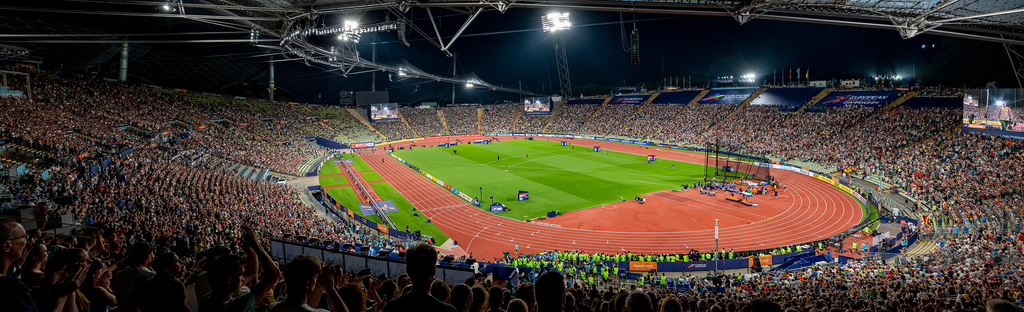
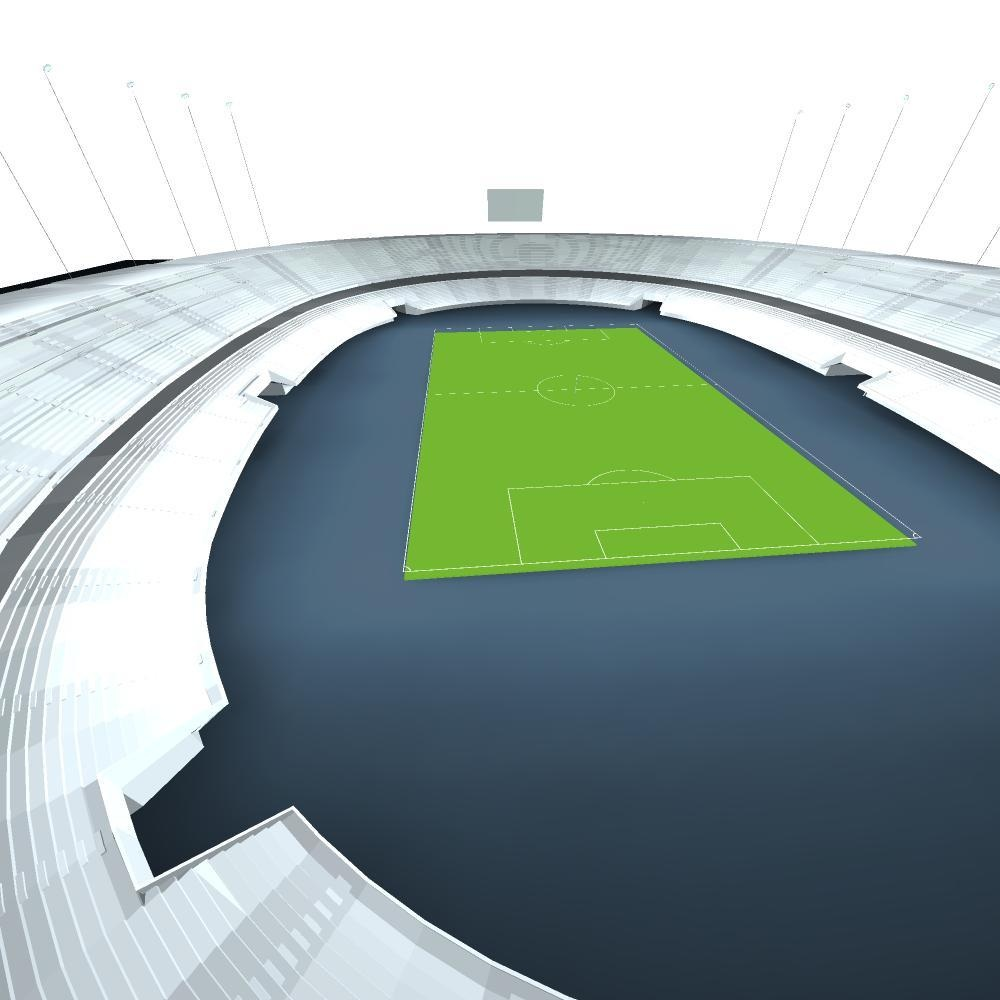
A track and field stadium cannot be designed reliably from fixture wattage or pole spacing alone. The oval running track, central infield, curves, straights, jumping areas and throwing zones create different projection distances and viewing directions.
REITA uses project drawings and IES photometric files to evaluate the lighting arrangement using DIALux or AGi32.
A Photometric Study Can Help Determine:
- Fixture quantity
- Fixture wattage
- Beam-angle combination
- High-mast locations
- Mounting height
- Aiming direction
- Average illuminance
- Minimum illuminance
- Uniformity
- Track and infield coverage
- Glare and spill-light risk
For facilities combining an athletics track with a football or rugby field, separate lighting scenes can also be considered for track-only, infield-only and full-stadium operation.
For broader engineering principles, see our Stadium Lighting Design Guide.
Typical Power Direction
Community athletics facilities may use lower or medium-power configurations where mounting heights and lighting targets are moderate. Higher-output 600W, 1000W, 1500W or above configurations may be considered for larger tracks, higher masts and professional stadium applications.
These wattages are not fixed replacement rules. Final fixture power and quantity must be verified according to pole height, projection distance, required lux and photometric calculation.
Beam Angle Selection
Athletics venues normally require a combination of optical distributions rather than one beam angle across the entire project.
- 10°–25° narrow beams: long-distance projection from high masts toward far track sections or the infield.
- 45° medium distribution: track straights, curves and medium-distance zones.
- 70°–95° wider distributions: near zones, local track sections and areas closer to the mast.
The exact optical combination should be confirmed using IES files and project-specific lighting simulation.
6. Colour temperature, CRI and flicker
For athletics, colour and flicker performance are very important:
- Colour temperature:
- 4,000–5,000 K is ideal.
- 4,000 K feels comfortable for community running tracks.
- 5,000 K works well for TV and national competitions.
- CRI (colour rendering index):
- CRI ≥ 80 for community tracks and school events
- CRI ≥ 90 for professional events and international competitions
- Flicker:
- Use flicker-free drivers especially if slow-motion video, finish-line cameras or broadcast are involved.
- This is the same requirement as for your stadium and basketball projects.
7. Track & Field Lighting Project Reference – France
One of our reference projects is a community athletics track in France, located right next to residential buildings.
- High masts around the track carry 1000 W LED floodlights
- The system was designed to provide safe lighting for evening running and training, while keeping light spill under control for the surrounding apartments
- Careful choice of optics and aiming directs most of the light onto the track and central area, not into bedroom windows
From a distance you see a compact bright head on each mast, but when you stand on the track, the light feels even and comfortable, without strong glare when looking ahead on the straights.
Projects like this give us practical experience with:
- Combining athletics tracks and multi-use infields
- Working near residential areas with strict glare requirements
- Using high-mast LED floodlights between 500–1000 W per head
8. Maintenance and safety considerations
Athletics facilities often operate for many hours during the week. To keep the lighting system safe and reliable:
- Follow a regular maintenance checklist similar to your stadiums:
LED Stadium Lighting Maintenance Checklist: How to Keep Your Field Safe and Bright for 10–15 Years - Inspect poles, brackets and foundations at least once a year, especially after storms
- Check surge protection (SPDs) in the main panel – for regions with heavy thunderstorms (for example parts of Latin America), combine 10 kV internal SPD with 20 kV external SPD as you already do on your football projects
- Clean lenses and check aiming every 1–2 years to maintain uniformity

9. Why Choose REITA for Track & Field Lighting?
REITA supports athletics lighting projects from fixture selection through photometric evaluation and project quotation.
- High-power LED stadium lights for athletics tracks and stadiums
- Multiple beam distributions for long-distance and near-zone lighting
- IES photometric files
- DIALux / AGi32 project evaluation
- High-mast lighting configuration
- Glare and spill-light control
- CRI and flicker options for camera-sensitive venues
- 347–480V and project-specific electrical configurations available
- Technical documentation and quotation support
Request a Track & Field Lighting Proposal
To prepare a preliminary lighting recommendation or photometric study, please send REITA the available project information.
Please provide:
- Track dimensions and number of lanes
- Overall athletics facility dimensions
- Use of the central infield
- Jumping and throwing event areas that require lighting
- Existing or planned mast locations
- Mast height
- Target lux level or competition class
- Uniformity requirements if specified
- Broadcast, video or finish-line camera requirements
- Voltage and frequency
- Existing fixture wattage and quantity for retrofit projects
- CAD drawing, PDF layout or site photographs
REITA can use this information to evaluate the appropriate LST fixture configuration, wattage, beam angles, quantity and aiming layout.
Contact REITA for Track & Field Lighting Support →
If you are selecting fixtures for a running track, athletics field or multi-sport facility, explore REITA’s professional LED sports lighting solutions for high-power fixtures, project-specific optics and photometric design support.
Need Help With a Stadium Lighting Project?
Send REITA your field size, pole height, required lux level, voltage and installation photos. We can help recommend suitable stadium lights, beam angles and fixture quantities for your project.
Contact REITA for Stadium Lighting Support