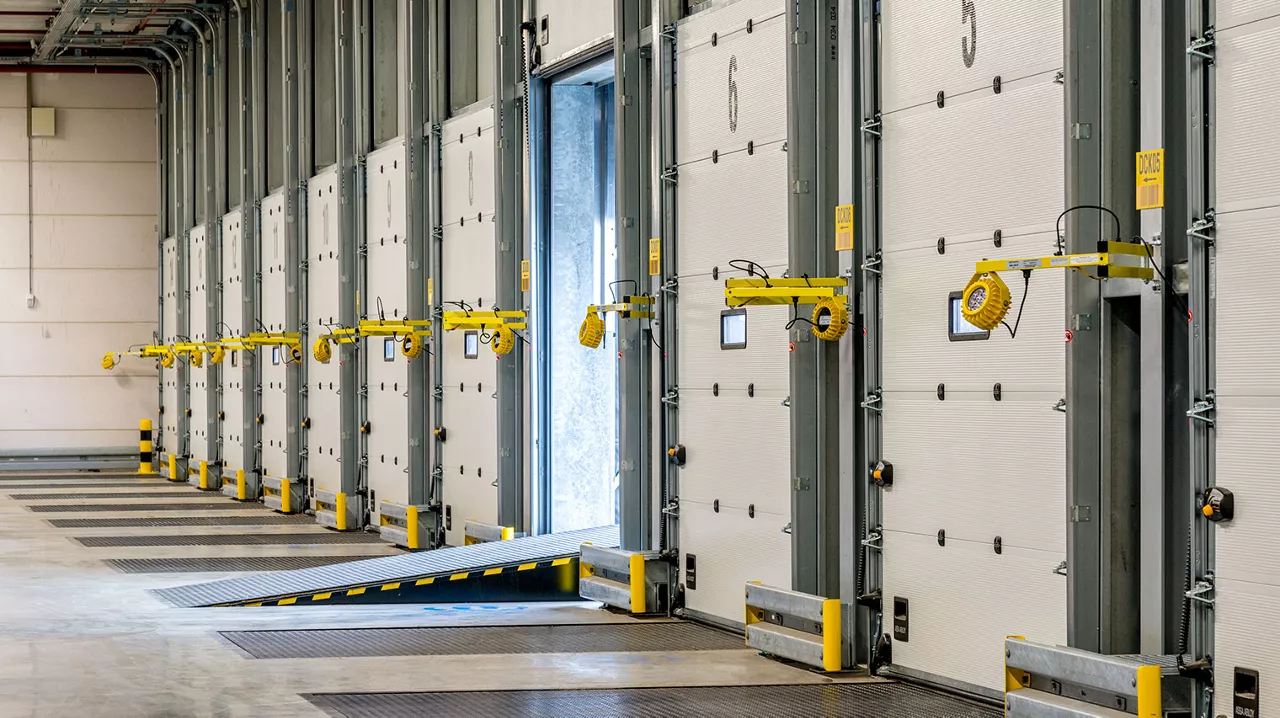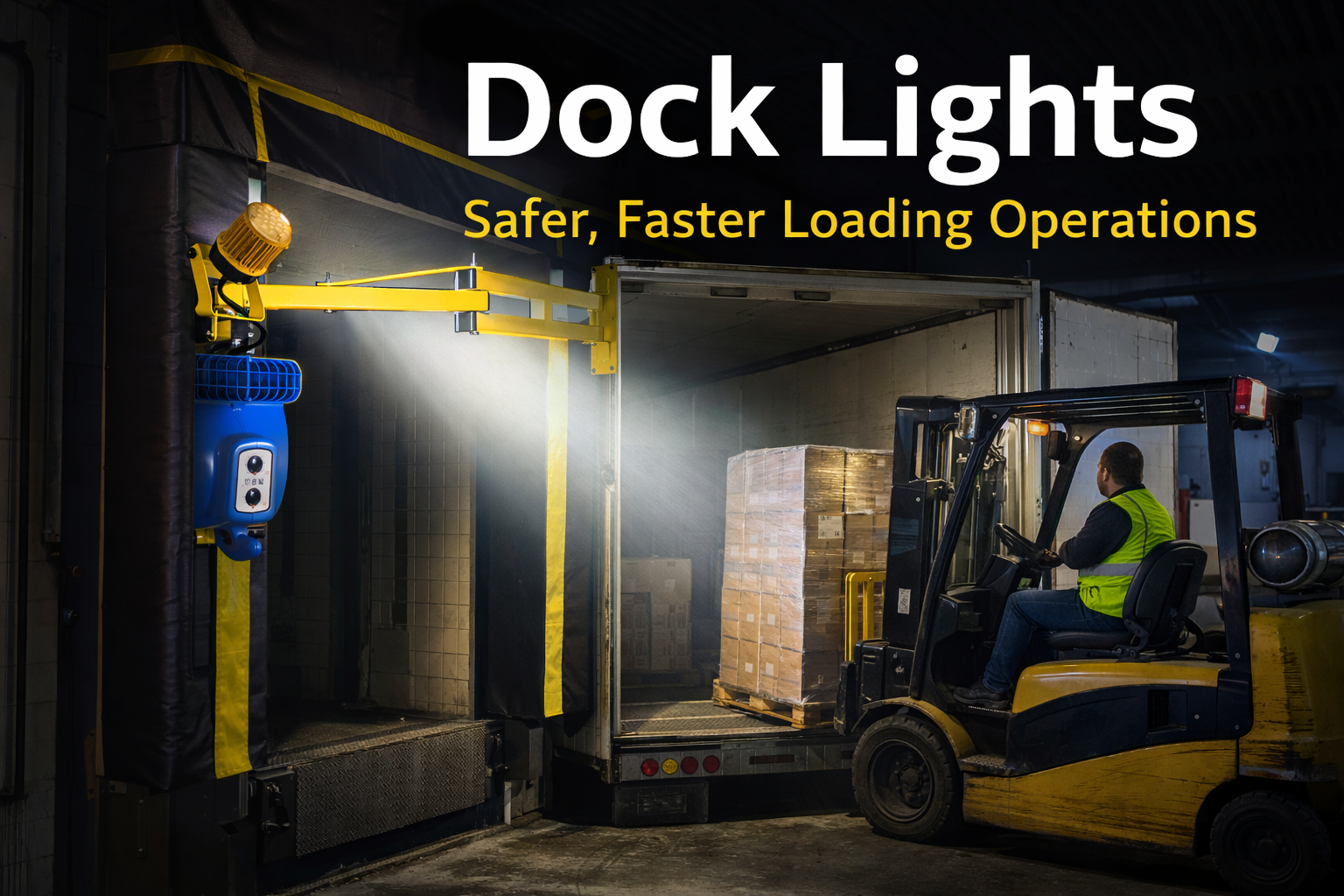
A loading dock is one of the busiest and most accident-prone areas in any warehouse. Trucks arrive under time pressure, forklifts move in and out constantly, and workers often need to check labels, pallets, packaging condition, and trailer position in a matter of seconds. In that environment, poor lighting is not a small inconvenience. It directly affects safety, speed, and accuracy.

That is why dock lights matter. Good dock lighting helps operators see into trailers more clearly, reduces shadows around dock doors, improves forklift movement, and supports faster loading decisions. For many facilities, the goal is not simply to make the area brighter. The goal is to put light exactly where the work happens.
Whether you are upgrading older fixtures or planning a new warehouse, choosing the right loading dock lights starts with understanding the real problems they solve and the practical differences between one dock layout and another.

What lighting problems do dock lights solve in real loading operations?
In real loading operations, visibility problems rarely come from a total lack of light. More often, the issue is that the light is in the wrong place, the wrong direction, or the wrong beam pattern.
One of the most common problems is the dark trailer interior. Even when the dock area itself looks bright, the inside of the truck or container may still be dim, uneven, or full of shadows. Workers then struggle to identify pallet labels, inspect cargo condition, or confirm load placement. This slows down the process and increases the chance of mistakes.
Another common issue is strong contrast between the warehouse interior and the trailer opening. When the light level changes too sharply at the dock door, the eye needs time to adjust. For forklift drivers, that transition can reduce reaction speed and make small obstacles harder to notice. In busy facilities, that matters.
Dock lights also solve problems caused by fixture position. Ceiling-mounted general lights may illuminate the floor reasonably well, but they often do not project light deep enough into the trailer. On the other hand, a poorly aimed local dock light can create glare for operators or drivers, especially when trucks back in at different angles.
In older facilities, maintenance is another hidden issue. Traditional fixtures may be damaged by vibration, accidental impact, heat buildup, or repeated repositioning. This leads to dim output, flicker, loose arms, or frequent replacement. In a high-use dock environment, reliability is just as important as brightness.
For that reason, many facilities use dedicated dock lights rather than relying only on overhead warehouse lighting. Properly selected loading dock lights are designed to direct light where loading actually happens: at the trailer entrance, along the cargo floor, and into the deeper section of the vehicle.

How do dock lights improve safety, visibility, and loading speed at warehouse doors?
The first benefit is safety. Better dock lighting helps workers identify edges, dock levelers, trailer gaps, pallet damage, straps, loose wrap, and other hazards before they become incidents. It also makes it easier for forklift drivers to judge distance and direction when entering or exiting a trailer. In practical terms, that means fewer sudden stops, fewer bumps, and fewer avoidable risks at the dock opening.
The second benefit is visibility. Good warehouse dock lights reduce shadows and give a more usable view of the working zone, not just a higher lumen number on paper. This is especially important for reading shipping labels, checking SKU markings, inspecting cartons, and confirming whether freight is positioned correctly. When workers can see clearly, they spend less time rechecking the same details.
The third benefit is speed. At many warehouse doors, loading delays are caused by hesitation. Operators slow down when they cannot clearly see the trailer floor, the back wall, the next pallet position, or the edge of the ramp. Better dock lighting reduces that hesitation. It helps teams move with more confidence and fewer interruptions.
Another important point is consistency. In a multi-door warehouse, uneven lighting from bay to bay creates operational variation. One door may be easy to work at, while another is harder to use during night shifts or bad weather. Standardized loading dock lights help create more predictable conditions across the dock line, which is valuable for both safety management and labor efficiency.
Well-designed dock lighting can also support cameras, scanners, and routine inspections. If a facility uses barcode scanning, visual checks, or dock monitoring systems, stable light quality usually improves accuracy. In other words, the right lighting supports not only people, but also process control.
For teams planning broader upgrades, it is helpful to review related lighting design guides so beam control, aiming angle, and glare management are considered together rather than as separate decisions.

What should buyers compare when choosing dock lights for different dock layouts?
Buyers should start with layout, not wattage. A compact enclosed dock, a refrigerated dock, and a large multi-bay shipping warehouse do not have the same lighting needs.
The first thing to compare is reach. Some dock lights are mainly for the immediate door area, while others are intended to project light farther into the trailer. If trailers vary in length or load depth, fixture reach becomes a practical buying factor.
The second thing to compare is beam control. A light that is too narrow may create a hot spot and leave side areas dark. A light that is too wide may waste output, increase glare, or spill light into the driver’s line of sight. Buyers should look at how the beam pattern matches the working distance and trailer geometry.

The third factor is adjustability. In real dock operations, the light often needs to be repositioned as trailer height, cargo type, or dock assignment changes. A fixture with poor arm design or weak positioning may drift, loosen, or become inconvenient over time. For that reason, mounting arm quality, aiming flexibility, and resistance to vibration deserve close attention.
Durability is another major comparison point. Dock fixtures work in harsh environments with dust, impact risk, repetitive movement, and long operating hours. Buyers should compare housing strength, thermal performance, lens protection, sealing, and ease of maintenance. A cheaper light that fails early often becomes the more expensive option after downtime and replacement labor are included.
It is also smart to compare how the fixture fits the wider facility. Some buyers are choosing between dedicated dock fixtures and other industrial lighting products already used in the building. That comparison can be useful, but dock-specific tasks usually require more focused light placement than general industrial fixtures provide.
For sites that include outdoor loading aprons, yard approaches, or exterior circulation areas, lessons from a flood light design guide can also help with beam spread, spill control, and transition lighting near the dock entrance.
Finally, buyers should compare serviceability. Can the fixture be cleaned easily? Can it be repositioned without loosening? Is it simple to maintain across multiple doors? In a warehouse with many loading positions, these operational details matter more than brochure claims.
Recommended REITA Dock Lights for Different Loading Dock Needs
| Dock Requirement | Recommended Product | Best Use |
|---|---|---|
| Trailer lighting only | 60W LED Dock Light | Use when the main need is focused LED task lighting inside trailers and containers. |
| Light and airflow combination | LED Loading Dock Fan Light | Use when workers need trailer visibility and fan-assisted comfort at the dock door. |
| 53-ft trailer operation | LED Dock Light with 18-Inch High-Airflow Fan | Use for deeper trailer lighting, stronger airflow and busy dock doors. |
| Heavy-duty dock ventilation | Heavy-Duty Loading Dock Fan Light NG Series | Use for dock leveller areas, heavy-duty trailer ventilation and demanding warehouse operations. |
For a complete overview of loading dock lighting design, trailer visibility, fixture placement, safety and maintenance, read the Loading Dock Lighting Complete Guide .
A practical checklist before selecting dock lights
Before buying dock lights, ask these practical questions:
Is the main problem poor trailer visibility, dark door edges, glare, or slow loading speed?
Do you need the light mainly at the dock opening, or deeper inside the trailer?
Will the fixture be used at one fixed angle, or adjusted frequently by operators?
Is the dock a single-bay setup, or part of a larger warehouse with many doors?
How important are durability, impact resistance, and maintenance access in your environment?
Are you evaluating only fixture price, or total operating value over time?
These questions usually produce better decisions than comparing wattage alone. In loading environments, useful light is more important than theoretical output.

Final thoughts
Dock lights are not just accessories for warehouse doors. They are working tools that help people load faster, see better, and operate more safely. The right solution reduces dark spots, improves trailer visibility, supports smoother forklift movement, and creates more consistent conditions across the loading area.
When buyers compare dock lighting options, the best approach is to focus on real operating needs: layout, reach, beam control, adjustability, durability, and long-term reliability. That is what turns a lighting purchase into an operational improvement.
For buyers reviewing loading dock lights for new projects or retrofits, a clear layout-based comparison will usually lead to a better result than a simple one-for-one replacement mindset. And where site conditions are more complicated, it helps to contact our team early and review the dock setup before final fixture selection.
If you already have a loading dock project and need product selection, OEM supply, trailer ventilation options or quotation, visit REITA Loading Dock Equipment Lighting & Ventilation Solutions or compare the complete Loading Dock Lights & Fans range.
Related Loading Dock Lighting Guides
If you are planning a more detailed dock lighting upgrade, it also helps to review how dock lights improve daily loading operations, how dock lighting should be planned as task lighting for dock doors and trailer interiors, how truck dock lights can illuminate trailers without blinding drivers, and when a loading dock fan matters as much as illumination during trailer loading. Buyers comparing fixture options may also want to review an LED dock light buyer’s checklist, understand LED dock lighting beam angles, and see how trailer dock lights improve visibility during night loading.
Need Dock Lights for a Warehouse Loading Project?
Send REITA your dock door quantity, trailer type, voltage, mounting position, arm length requirement, airflow requirement and installation photos. We can help recommend suitable LED dock lights, beam angles, adjustable arms and dock fan light options for your warehouse.
Contact REITA for Dock Lighting Support