At many warehouses, buyers use the terms dock light and dock lighting as if they mean the same thing. In practice, they do not.
That difference matters because many loading dock problems are caused not by a lack of brightness, but by a mismatch between the lighting solution and the actual task. A warehouse may have acceptable area lighting near the dock doors, yet workers still struggle to see deep inside trailers. Another site may install a powerful local fixture, but still leave the surrounding dock edge, floor transition, and loading position uneven or hard to work in.
So before choosing equipment, it helps to separate the two ideas clearly.
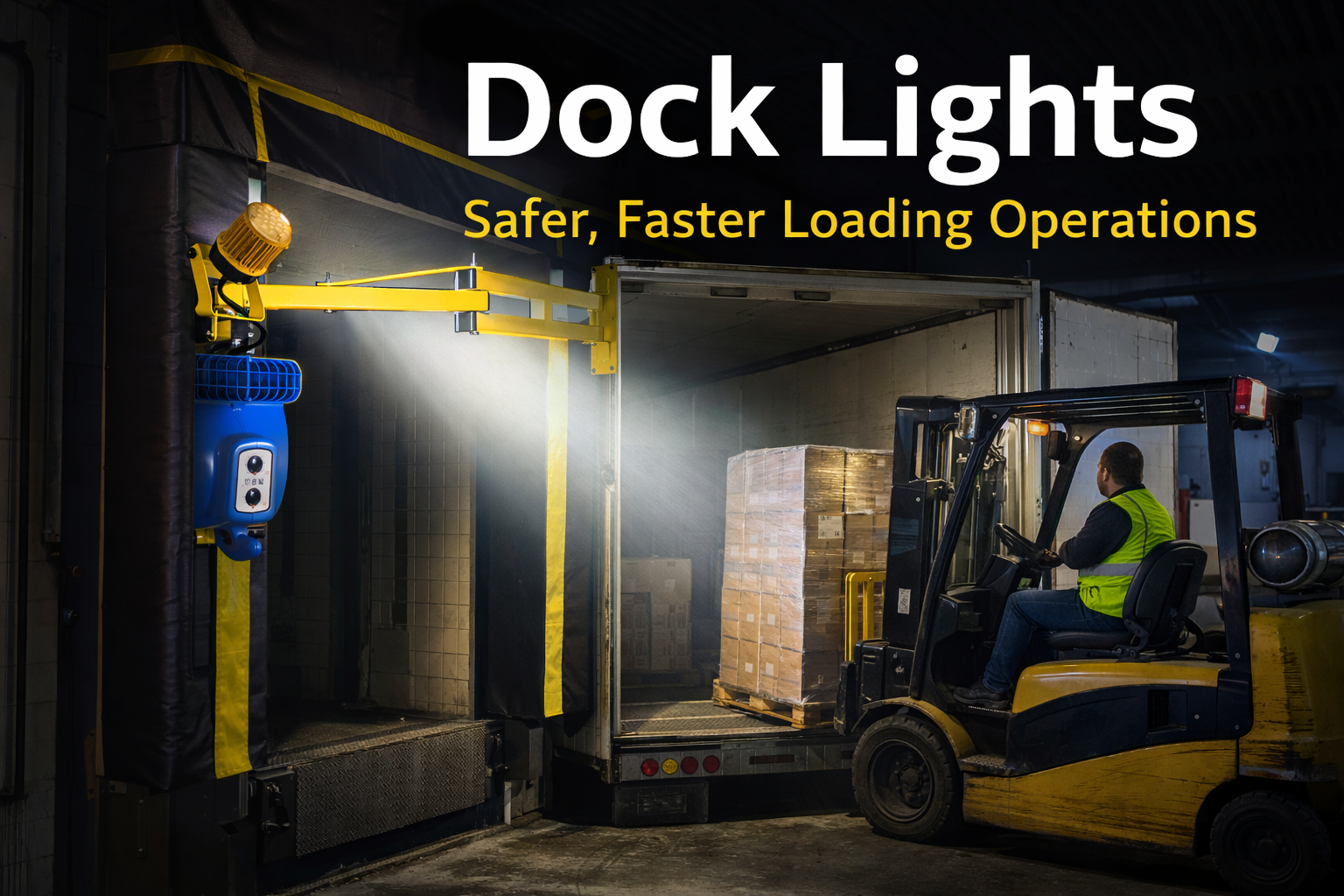
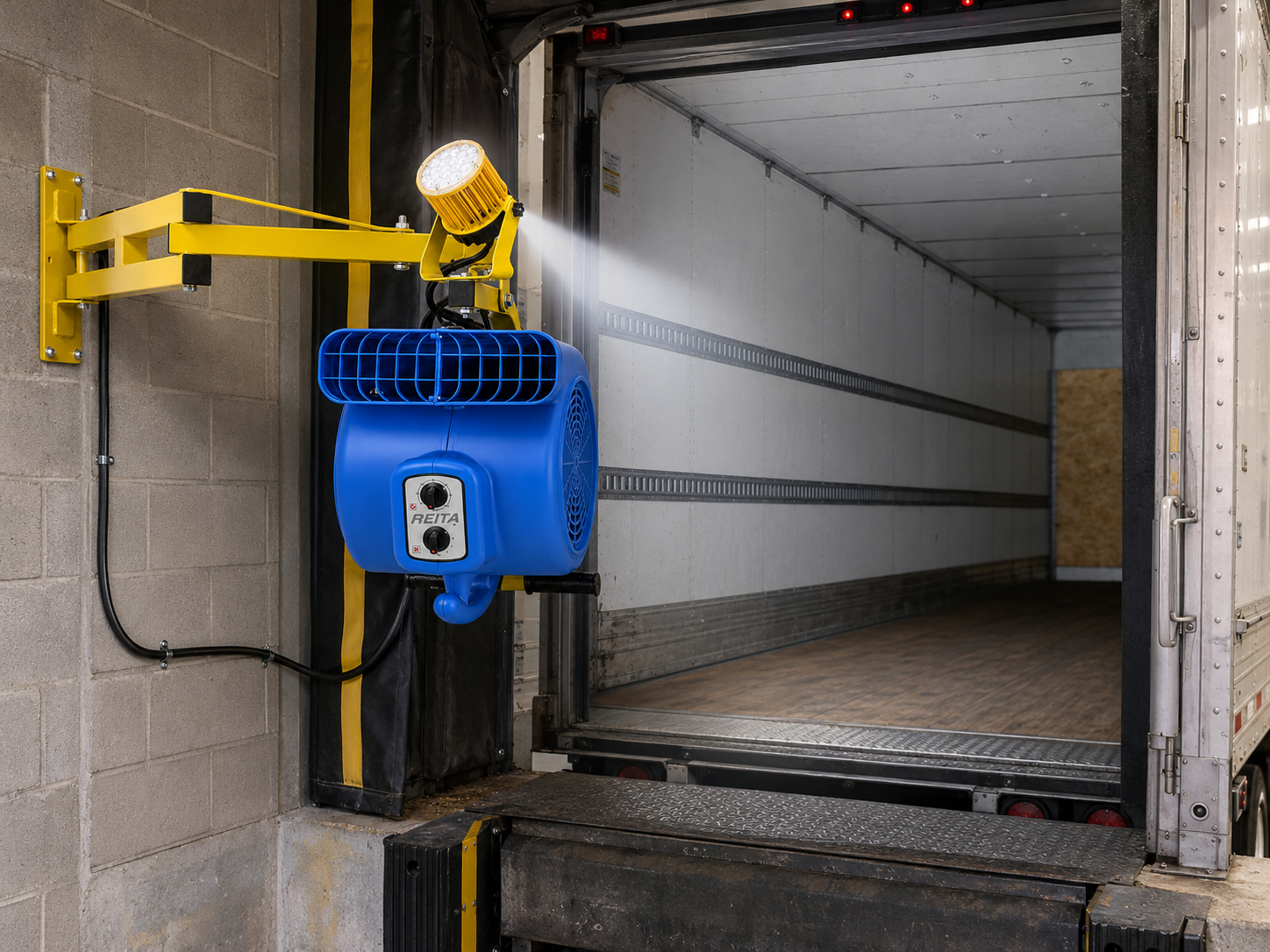
A dock light usually refers to a local task light installed near a dock door and aimed into a trailer or a specific loading position. Dock lighting, on the other hand, is a broader term. It includes the full lighting strategy around the loading area: task lights, area lighting, trailer visibility, door-zone illumination, transition lighting, and in some facilities even the way nearby work zones support forklift movement and safety.
Understanding this difference helps buyers avoid a common mistake: solving a system problem with a single fixture, or overbuilding a simple task-lighting problem into an unnecessarily large project.
What is the difference between a dock light and full dock lighting?
The simplest way to explain it is this: a dock light is usually one piece of equipment, while dock lighting is the overall lighting approach for the loading dock area.
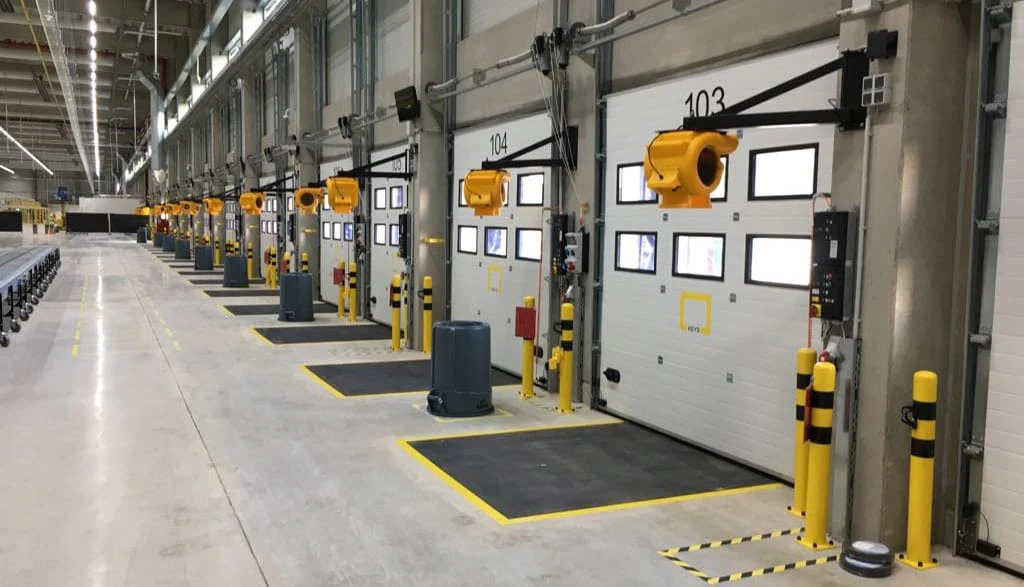
A dock light is normally used for local illumination. It is mounted near the dock door and aimed where work happens most directly, often into the trailer interior or onto the immediate loading zone. Its job is focused visibility. Workers need to read labels, inspect cartons, identify pallet placement, and see obstacles or load conditions more clearly. A well-positioned dock light helps with exactly those tasks.
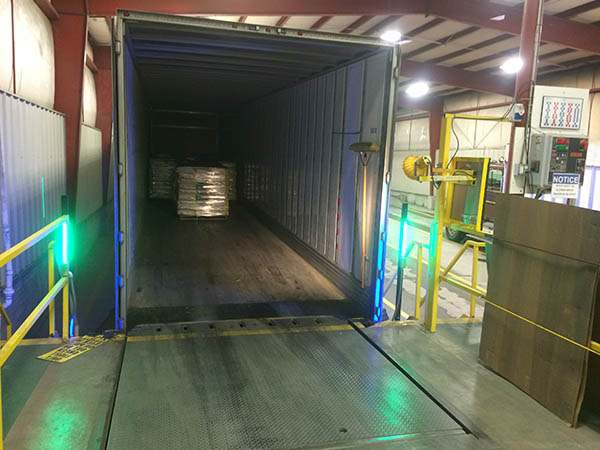
Dock lighting is broader. It includes the dock light, but it also includes the surrounding conditions that affect safety and loading speed. For example, the trailer entrance may be visible with one local fixture, but the dock floor, door threshold, leveler area, and forklift approach still depend on a wider lighting plan. If those areas are uneven, shadowed, or overly bright in one direction and too dark in another, the dock may still underperform even if the trailer itself is lit.
This is why the difference matters. A dock light solves a local task-visibility problem. Dock lighting solves the larger operational visibility problem.
In real loading operations, both can be important. A facility often needs a focused dock light led solution for the trailer interior and a wider dock lighting strategy for the overall working zone. The right answer depends on what problem you are actually trying to solve.
When do you need a single dock light instead of a complete dock lighting system?
A single dock light is often enough when the main problem is very specific and localized.
For example, many warehouses already have acceptable ambient light near the loading doors. The floor area may be bright enough for walking, staging, or basic forklift movement. But once workers look into the trailer, visibility drops sharply. Labels are harder to read, pallets are harder to inspect, and the deeper cargo area becomes shadowed. In that case, the problem is not the whole loading dock environment. The problem is the lack of targeted task lighting. A single dock light may solve it efficiently.
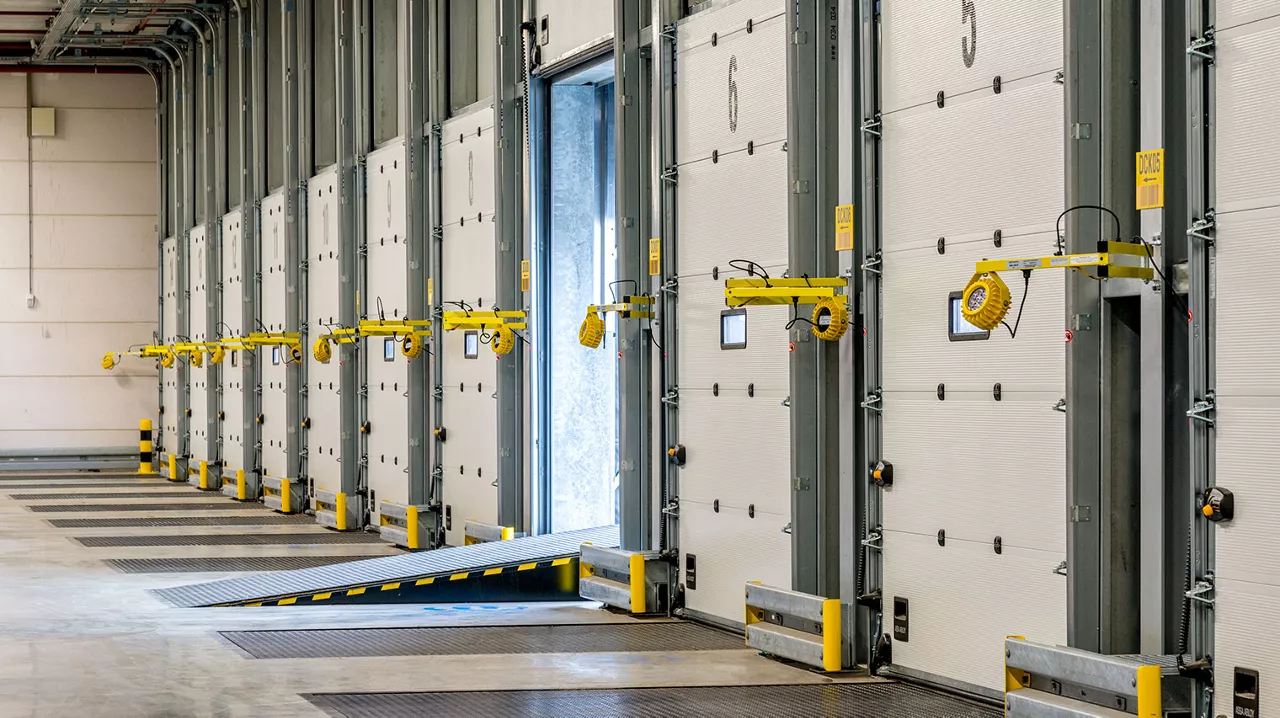
A local dock light also makes sense when one or two doors underperform while the rest of the dock line is generally acceptable. Instead of redesigning the entire lighting layout, a buyer may only need to improve one difficult position, one deeper trailer application, or one higher-use door.
Single dock lights are also useful in retrofit situations. If the facility already has general lighting but needs better trailer visibility, adding a local fixture can be faster and more practical than changing the full dock lighting system. This is especially true when the goal is to improve a clearly defined task zone rather than the whole warehouse edge.
Another case is where flexibility matters. Adjustable dock lights can be aimed according to trailer height, cargo type, or door use. In operations where the task point changes more than the general environment, local lighting gives more control.
That said, a single dock light is not the right answer for every dock problem. If the surrounding loading area is also poorly lit, if dock edges are unsafe, or if multiple bays suffer from uneven visibility, then the issue is larger than one fixture. In that case, buyers should think in terms of dock lighting rather than only a dock light.
How do you choose between local task lighting and area lighting at a loading dock?
The best way to choose is to start with the work itself.
Ask where visibility is actually failing. Is the real problem deep inside the trailer? Is it at the dock threshold? Is the issue glare at the entrance, shadows around the leveler, or inconsistent light across several dock doors? Different answers point to different solutions.
Choose local task lighting when the job requires concentrated light at one specific work zone. This is common when workers need better visibility for loading, unloading, inspecting freight, or reading labels inside trailers. In these cases, a dock light is usually the more precise and efficient answer. It directs light exactly where the task happens.
Choose area lighting improvements when the problem affects the broader dock environment. If workers, pedestrians, or forklift drivers struggle to move safely around the entire dock face, then the issue is not just trailer visibility. It is a larger dock lighting problem. Wider improvements may be needed to reduce shadows, improve uniformity, and make the whole working area more predictable.
In many real applications, the best solution is not one or the other, but a combination. Area lighting provides baseline visibility across the dock zone, while the dock light provides high-value task illumination into the trailer. That combination usually produces a better operational result than relying on either one alone.
Beam control also matters when making this decision. Area lighting is meant to support broader coverage. Local task lighting is meant to place useful light into a more defined zone. If buyers ignore that distinction, they often end up with a bright-looking dock that still performs poorly.
Another factor is speed. If operators hesitate because they cannot judge trailer depth, pallet position, or cargo condition, then local task lighting is often the missing piece. If the hesitation comes from poor overall visibility near multiple doors, then the lighting plan needs to be broader.
A practical way to think about it is this: if the problem is “I cannot see inside the trailer well enough,” start with a dock light. If the problem is “the whole dock area feels uneven, shadowed, or unsafe,” start with the dock lighting system.
Why buyers often confuse brightness with useful lighting
One reason buyers struggle with this choice is that they focus too much on brightness alone.
A brighter fixture does not automatically create a better loading dock. In fact, excessive brightness without control may create glare, hard contrast, and wasted light. A dock can look bright while still having poor usability at the exact point where loading happens.
Useful lighting is about direction, reach, beam pattern, and how the light supports the task. A focused fixture aimed into the trailer may improve work more than a larger but poorly controlled area-lighting upgrade. On the other hand, a local fixture cannot compensate for a dock zone that is broadly unsafe or inconsistent.
That is why comparing local task lighting with area lighting should not start with wattage alone. It should start with visibility needs, worker movement, trailer depth, and the actual layout of the loading position.
For buyers planning a wider upgrade, it is also helpful to review the full loading dock lighting strategy before choosing hardware. And for those comparing more focused solutions, a practical guide to dock lights can make the local task-lighting decision easier.
A simple way to decide what you actually need
If your loading dock already has acceptable ambient light and the main complaint is trailer visibility, you probably need a dock light.
If your dock has uneven brightness, difficult floor transitions, poor consistency across multiple doors, or broader safety concerns, you probably need dock lighting improvements beyond a single fixture.
If both conditions exist, the answer is usually a layered approach: area lighting for the environment and a dock light for the task zone.
This is also why many facilities do not need the most complicated solution. They need the right level of lighting for the real problem. In some cases, that means a single local fixture. In others, it means stepping back and treating the dock as a full operational lighting zone.
Final thoughts
The difference between a dock light and dock lighting is simple once you frame it correctly. A dock light is usually a local task-lighting tool. Dock lighting is the broader system that supports safety, visibility, and loading performance across the full dock area.
Choosing the right one depends on what needs improvement. If the issue is inside the trailer, local task lighting is often the right move. If the issue affects the full loading position, multiple doors, or overall dock safety, the solution needs to be broader.
The most effective buyers do not ask only, “Which fixture is brighter?” They ask, “Where is visibility failing, and what type of lighting solves that problem best?”
That approach leads to better results, better efficiency, and fewer mistakes in both purchasing and daily dock operations.
For buyers comparing options, it also helps to review our industrial lighting products and contact our team with dock photos, trailer dimensions, or current layout details before making a final selection.