


Designing loading dock lights is not just about making a dock door look bright. In real warehouse and distribution center operations, the goal is to create usable light exactly where loading work happens: at the dock threshold, on the trailer floor, around the leveler, and deep enough into the trailer to support safe and efficient movement.
That is why a design checklist matters.
Many dock lighting problems come from skipping basic planning. A site may install strong fixtures but still end up with glare at the door, dark trailer interiors, poor visibility around pallet edges, or uneven conditions from one bay to the next. On paper, the dock is “lit.” In practice, workers still slow down, recheck loads, and struggle with shadows during loading and unloading.
A good checklist helps prevent that. It forces buyers, contractors, and facility teams to think about layout, task visibility, beam control, mounting position, and how the dock is actually used day to day.
For warehouses and distribution centers, this is especially important because dock activity is fast, repetitive, and closely linked to safety and throughput. Better loading dock lighting does not just improve visibility. It supports smoother forklift movement, clearer trailer inspection, and more consistent performance across multiple loading positions.
What should be included in a loading dock lights design checklist?
A practical design checklist should begin with the work zone, not the fixture.
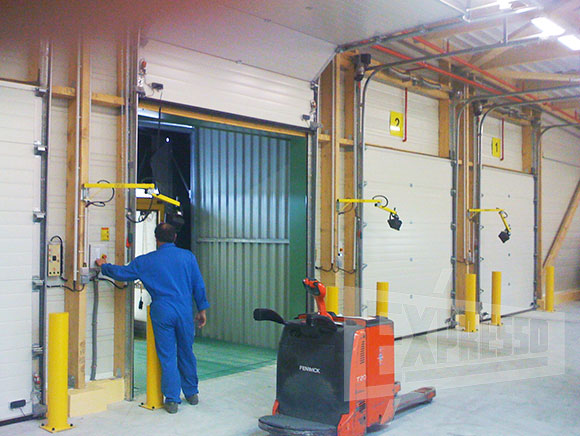
The first item is the dock layout itself. Before choosing any loading bay dock lights, look at how many doors the facility has, how the trailers align, how deep loading work usually happens inside the trailer, and whether the dock is enclosed, semi-open, or exposed to changing outdoor light. A single-bay dock and a multi-door distribution center do not have the same lighting needs.
The second item is task definition. Ask what workers actually need to see. In some docks, the main challenge is reading labels and inspecting pallets near the entrance. In others, the problem is deeper trailer visibility. If forklifts are moving far into the trailer, the light must reach beyond the door opening. If the work is concentrated at the threshold, coverage and glare control may matter more than long throw.
The third item is the transition zone. This area is often overlooked. The eye adjusts when moving between the warehouse interior and the darker trailer interior, and poor light balance at the dock opening can reduce visibility right where the work becomes most hazardous. A proper checklist should evaluate the dock door, leveler, trailer edge, and immediate floor transition as one connected zone.
The fourth item is fixture position and aiming range. A dock light that cannot be aimed properly is rarely a good dock light in real use. Warehouse operations change. Trailer heights vary. Loads change. The fixture needs to support adjustment without becoming difficult to position or drifting out of place over time.
The fifth item is consistency across dock doors. In a distribution center, one underperforming bay can become a hidden efficiency problem. A design checklist should not focus on a single door only. It should ask whether light levels and working conditions are reasonably consistent across the dock line.
The sixth item is durability. Loading docks are not gentle environments. Fixtures may face vibration, dust, impact risk, and long operating hours. A good design checklist should always include environmental suitability, housing durability, and maintenance access.
How do you avoid glare, dark zones, and trailer shadows in dock lighting design?
The easiest way to create poor dock lighting is to focus only on brightness.
Glare usually happens when the fixture is too exposed to the operator’s line of sight, aimed too aggressively, or selected with the wrong beam pattern for the working distance. Workers may feel the area is bright, but the light becomes uncomfortable and less usable. In forklift operations, glare can also affect depth judgment and reduce confidence during trailer entry.
Dark zones usually come from uneven beam placement. This happens when the light is concentrated too narrowly at one point or when the fixture is mounted in a way that leaves the floor edges, trailer corners, or deeper cargo area underlit. These gaps do not always stand out during a quick visual check, but they become obvious during actual work.
Trailer shadows are one of the most common dock lighting problems. A trailer is a deep, enclosed space, and cargo itself creates shadow layers. Overhead ambient warehouse lighting often does not solve this. The dock opening may look bright while the work area inside the trailer remains difficult to see.
To avoid these problems, design should begin with beam direction and task distance. The light should be aimed toward the real working zone, not just the center of the opening. Beam angle selection matters because a narrow beam may help with deeper reach, while a wider beam may better support near-field visibility. The right choice depends on how the trailer is used.
Mounting position also plays a major role. If the fixture is mounted too high, too low, or too far off-axis from the trailer entrance, it may waste output or create stronger shadow lines. A good design keeps the light useful, controlled, and adjustable.
It also helps to think in layers. In many facilities, the best result comes from combining broader loading dock lighting for the overall area with more focused dock lights for the trailer interior. That layered approach is often more effective than trying to make one fixture solve every problem.
Which lighting specs matter most for warehouse and distribution center dock projects?
Once the layout and visibility tasks are clear, the next step is comparing the right specifications.
Beam angle is one of the most important. Buyers often start with wattage because it looks simple, but beam control usually has a larger effect on whether the light actually works at the dock. A fixture must match the trailer depth, door geometry, and task zone it is meant to serve.
Aiming flexibility is another major factor. In loading dock applications, a fixture is not static in the same way as a standard warehouse ceiling light. The more varied the trailers or the work conditions, the more important adjustability becomes.
Light distribution is just as important as output. A design checklist should ask whether the fixture is intended for deep trailer reach, near-field task work, or broader dock-side visibility. Those are different use cases, and not every light handles them equally well.
Durability also matters more than many buyers expect. In warehouse and distribution center environments, maintenance interruptions are expensive because they affect active doors. A fixture that performs well but is easy to damage or difficult to maintain can quickly become a poor long-term choice.
Environmental suitability should also be part of the checklist. Some docks face damp air, temperature swings, dust, or repeated exposure to demanding operating conditions. In those situations, the lighting design should consider more than photometrics alone.
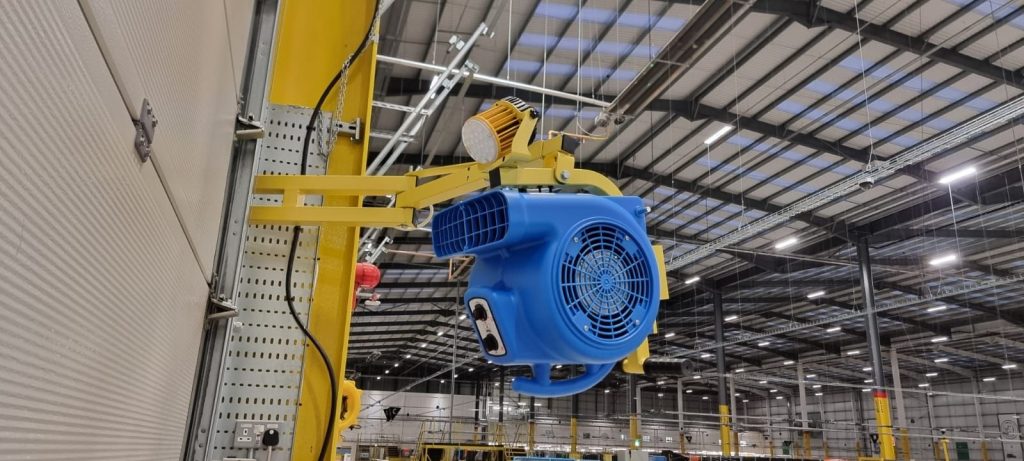
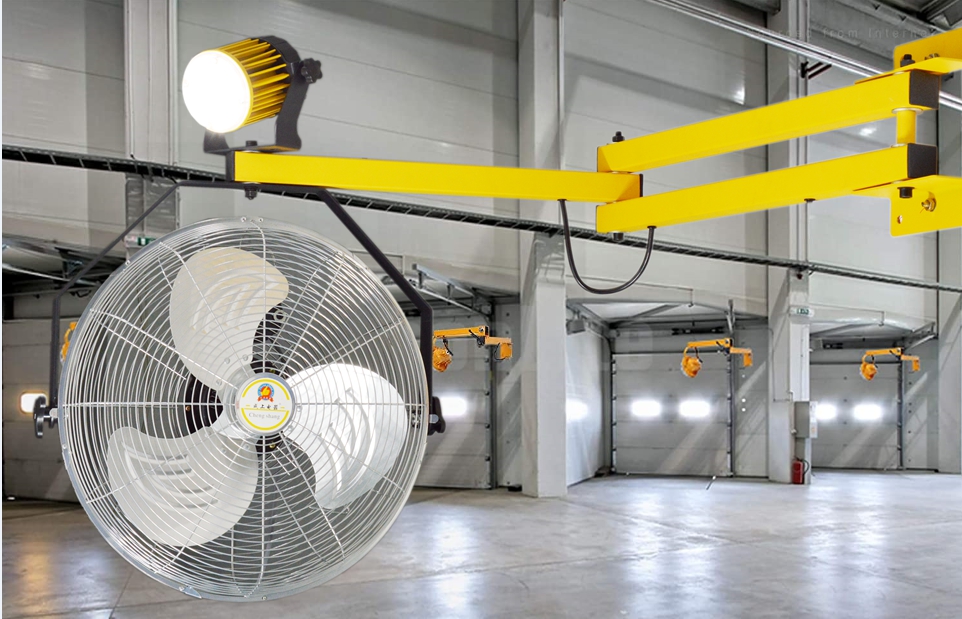
If the dock is in a hot working environment, airflow may also become part of the design discussion. In some cases, visibility is only one part of the real problem. Worker comfort inside or near the trailer can affect productivity as well, which is why some projects consider fan-and-light combinations instead of lighting only.
Finally, do not ignore maintainability. Can the fixture be cleaned, repositioned, and serviced without excessive downtime? In large warehouse operations, this practical question matters just as much as the initial specification sheet.

A simple design checklist buyers can actually use
A strong loading dock lights checklist should answer these questions clearly:
How many dock doors are being served, and are conditions similar across them?
Where is the real visibility problem: the trailer interior, the threshold, the dock face, or the surrounding floor area?
How deep into the trailer does useful light need to reach?
Will workers mainly inspect, load, unload, or move continuously with forklifts?
Does the design reduce glare for operators and drivers?
Does it avoid dark floor edges, trailer corners, and shadowed cargo zones?
Can the fixture be aimed easily as trailer position or work conditions change?
Is the fixture suitable for warehouse and distribution center operating conditions?
Will the solution be easy to maintain across one bay or many?
These are the questions that turn a fixture choice into a usable lighting design.
Final thoughts
A loading dock lights design checklist is valuable because it keeps the project focused on how the dock actually works. That is the difference between lighting that only looks adequate and lighting that genuinely improves safety, visibility, and loading speed.
For warehouses and distribution centers, the best results usually come from starting with the work zone, then matching the fixture to the task. Layout, trailer depth, transition visibility, beam control, adjustability, and durability all matter. When those factors are ignored, the result is often glare, dark zones, and inconsistent dock performance.
When they are planned correctly, dock lighting becomes a real operational tool. It helps workers see better, move faster, and work more safely at the doors that matter most.
If you are reviewing a broader loading dock lighting strategy, comparing focused dock lights, or deciding how local task lighting fits into your wider dock design, it helps to start with a checklist rather than a wattage target. And for site-specific recommendations, you can also review our industrial lighting products or contact our team with dock photos, trailer dimensions, or layout details.

