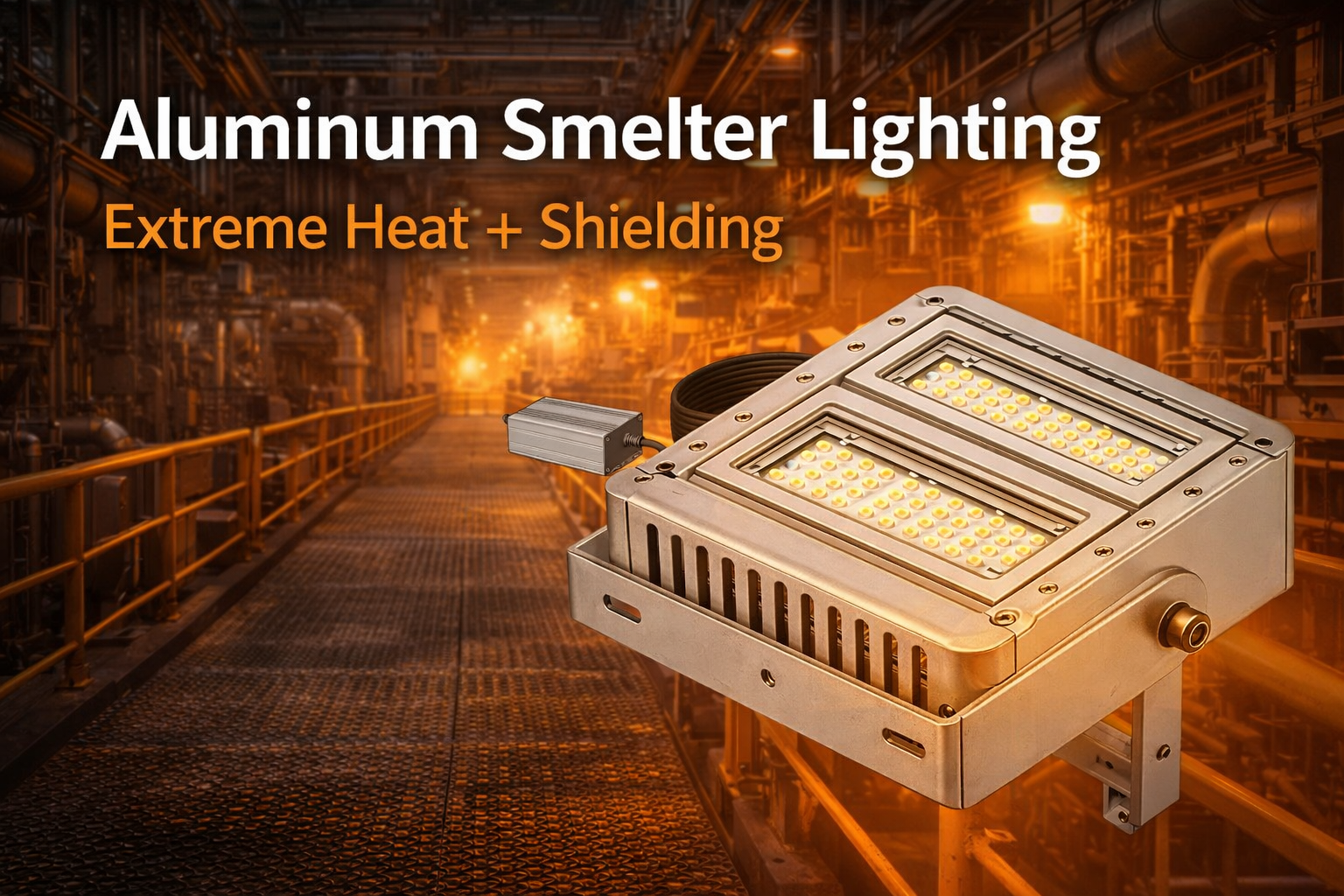
Aluminum smelters are among the most punishing environments for industrial lighting. It’s not just “hot.” Smelters combine:
- extreme process heat (pots, hot aisles, radiant surfaces),
- heavy dust and particulates,
- corrosive atmospheres (fluorides and other contaminants depending on process),
- and challenging maintenance access.
That combination is why standard LED high bays and even many “industrial” fixtures fail early—drivers overheat, optics degrade, seals leak, and light output becomes unreliable.
This guide explains how to select high temperature lighting for aluminum smelters, with a practical focus on materials, sealing, corrosion considerations, Ta rating, and shielding strategies for potlines and hot process aisles.
For the overall high-temperature framework (Ta/Tj, radiant heat, selection classes), read High Temperature LED Lighting – Complete Guide.
1) What special considerations apply to aluminum smelter lighting (heat + corrosion)?
1.1 Radiant heat near pots and hot process equipment
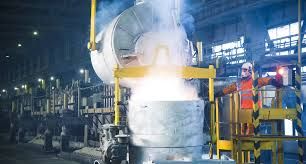
Smelter lighting often fails not because the air is hot—but because fixtures “see” hot surfaces. Radiant heat loads the lens and housing, pushing internal temperatures far above what a simple ambient reading suggests.
Key risk zones include:
- potline aisles,
- tapping/maintenance corridors,
- areas facing open hot process equipment,
- and overhead structures near hot plumes.
If you are planning by wattage, you will miss the real failure drivers. See Why “Same Wattage Replacement” Fails in High Temperature Zones.
1.2 Dust and particulates act like thermal insulation
Dust on heat sinks reduces cooling capacity. Dust on lenses reduces delivered light and creates uneven visibility on walkways. In smelters, this is not occasional—it is continuous.
A reliable system must assume:
- heat sinks get dirty,
- lenses will need cleaning,
- and thermal margin will be consumed over time.
1.3 Corrosive atmosphere attacks metals, fasteners, and seals
Depending on smelter chemistry and ventilation, airborne contaminants can accelerate corrosion and degrade seals. Common practical outcomes:
- fastener corrosion and loosening,
- gasket degradation,
- seal failure and ingress,
- optics clouding from chemical exposure.
That’s why material selection and sealing strategy matter as much as lumen output.
1.4 Vibration and thermal cycling
Potline operations, fans, and heavy equipment create vibration. Combine that with thermal cycling and you get bracket drift, stress on internal connections, and accelerated seal wear.
2) How do you choose materials and sealing for harsh smelter environments?
2.1 Lens and optical face material
In radiant-loaded and chemically harsh areas, the optical face must survive:
- heat exposure,
- dust abrasion,
- and potential chemical contamination.
Practical preference in harsh hot zones:
- prioritize optics and lens materials that resist haze and deformation under heat.
- avoid low-grade plastics where radiant exposure is strong.
2.2 Gaskets, seals, and ingress protection (IP)
Smelter zones often require sealing against dust and harsh air. Many projects prefer IP66 class protection for dust and washdown resistance, but sealing must be matched to high-temperature materials.
Use IP and IK Ratings Explained as your baseline reference for harsh-environment selection logic.
2.3 Housing and hardware durability
Look for:
- robust housing materials and coatings appropriate for corrosive environments,
- stainless or corrosion-resistant hardware where possible,
- mounting brackets that hold aiming position under vibration,
- and a maintenance plan for periodic checks.
2.4 Driver strategy (integrated vs remote)
In smelters, drivers are often the first component to fail when heat and contamination combine. Where Ta is high and plumes are present, remote driver placement can be a major reliability advantage:
- keep electronics out of the hottest zone,
- improve service access,
- reduce heat stress inside the luminaire.
This is especially common in 150°C class and plume-adjacent installations—see High Temp 150°C Lights.
3) What Ta rating and shielding are common near pots and hot process aisles?
The correct class depends on measured Ta at the mounting point and radiant exposure. In smelters, radiant heat can dominate even if Ta seems manageable.
3.1 Practical Ta tier guidance (smelter reality)
- 80°C / 176°F class: warmer areas away from direct line-of-sight to hot surfaces (less common near potlines)
- 100°C / 212°F class: hot aisles and higher mounting points with moderate plume exposure
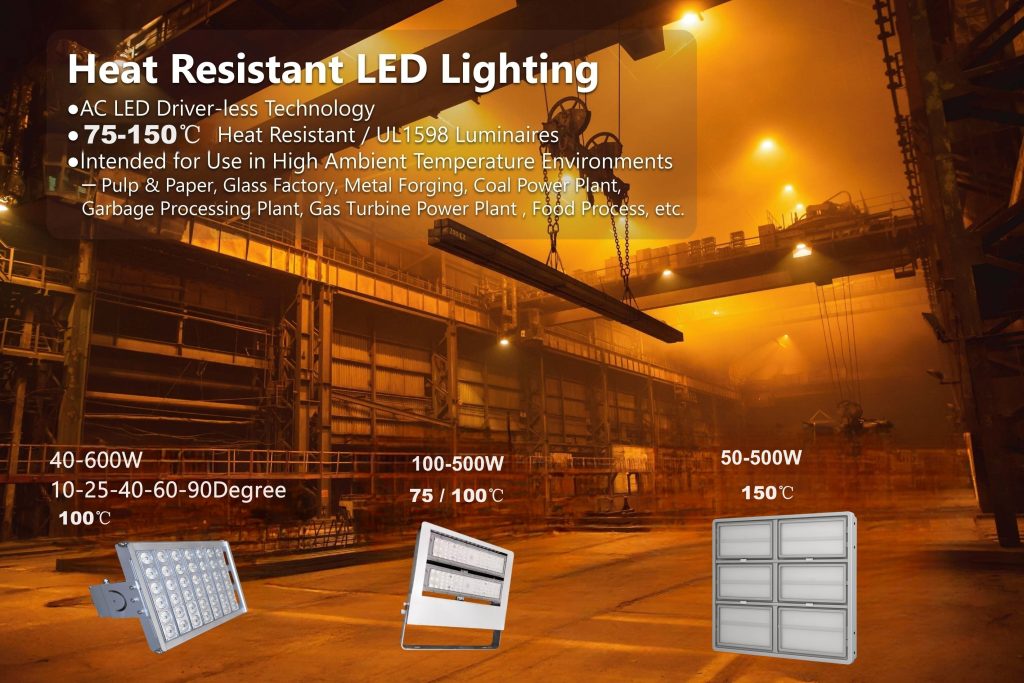
- 150°C / 302°F class: potline-adjacent corridors, plume/radiant-loaded areas, and harsher zones (common)
- 200°C / 392°F class: extreme placements that typically require engineered distance + shielding + remote electronics
If you need a fast decision tree for choosing class, use High Temp LED Rating Decision Tree (80–200°C).
3.2 Shielding strategy (the most cost-effective reliability upgrade)
In smelters, shielding often delivers outsized benefits because it reduces radiant loading on:
- lens face,
- seals,
- and internal air temperature.
Effective shielding usually means:
- a metal shield between the hot surface and the luminaire,
- an air gap (critical),
- and placement that reduces direct line-of-sight.
Shielding is not optional when fixtures face hot surfaces at close distance—it is engineering.
3.3 Placement strategy matters as much as product selection
Even the best high temp fixture will struggle if installed in direct radiant exposure with no distance and no shield. Before you buy:
- map line-of-sight to hot surfaces,
- identify plume paths,
- and choose mounting positions that reduce thermal loading.
For beam angle and aiming basics, reference Flood Light Design Guide.

4) Layout priorities in smelters (visibility + safety)
4.1 Uniformity beats peak brightness on walkways
Smelter walkways, stairs, and inspection corridors need predictable visibility. Avoid designs that create bright hotspots and dark gaps.
4.2 Glare control is a safety requirement
Reflective equipment surfaces can create glare. Use aiming limits and optics that keep peak intensity out of normal sightlines—especially along long potline corridors.
4.3 Plan for maintenance reality
If access is difficult, reliability matters more than “highest lumens.” Specify:
- cleaning intervals,
- service access approach,
- and driver strategy that reduces interventions.
5) REITA experience
Hot process aisle: improved reliability with class + shielding + driver strategy
In smelter-adjacent projects, the improvements that consistently reduce failures are:
- selecting the correct Ta class based on measured mounting-point conditions,
- reducing radiant load using shielding and placement,
- and using a driver strategy that avoids plume exposure.
This approach reduces early driver failures and keeps light output stable in harsh environments.
For project support, start here: Contact REITA.
6) Quick FAQ
What special considerations apply to aluminum smelter lighting (heat + corrosion)?
Smelters combine extreme radiant heat, heavy dust, corrosive atmospheres, vibration, and difficult maintenance access. Lighting must be selected for Ta rating, radiant heat control, sealing, materials, and serviceability—not just watts and lumens.
How do you choose materials and sealing for harsh smelter environments?
Use heat-resistant optics and gaskets, corrosion-resistant hardware/coatings, and sealed designs (often IP66) appropriate for dust and harsh air. Ensure the sealing strategy matches high-temperature materials and maintenance realities.
What Ta rating and shielding are common near pots and hot process aisles?
Many potline-adjacent zones require 150°C-class thinking, especially where radiant exposure is strong. Shielding with an air gap and careful placement are common to reduce radiant load on lenses and seals and improve reliability.
Next Step
If you share photos, mounting height, Ta (avg/peak), and whether the fixtures face hot surfaces, we can recommend temperature class, shielding placement, optics, and driver strategy.
Contact link: Contact REITA